
Japan's logistics sector depends heavily on road transport, and foreign drivers now have a formal route into the industry through the Specified Skilled Worker (SSW) Automobile Transportation field. For experienced commercial drivers, this has created a clearer way to pursue truck driver jobs in Japan for foreigners.
However, the process is not simply “have a truck licence, get a job in Japan.” Candidates need to meet Japanese language and skills requirements, obtain the appropriate Japanese driving licence, secure an eligible employer and complete the required immigration procedures.
Quick answer
Foreign nationals can work as truck drivers in Japan under the Specified Skilled Worker (i) Automobile Transportation field. For the truck category, the official route includes the SSW truck skills test, JFT-Basic or JLPT N4 or higher, and the required Japanese Class 1 driving licence.
24,500
April 2024 – March 2029
Japan's official SSW website lists an expected maximum acceptance of 24,500 workers for the wider automobile transportation field from April 2024 to March 2029. This total covers truck, bus and taxi transportation; it is not a guarantee of 24,500 truck vacancies.
Why Are Truck Driver Jobs in Japan Opening to Foreigners?
Japan has an established logistics network serving factories, warehouses, retailers and distribution centres across the country. At the same time, transport companies are dealing with driver shortages and an ageing workforce. Automobile transportation was therefore added to the SSW framework as one of the sectors where eligible foreign workers can be employed.
For foreign drivers, the important change is that truck driving is no longer only an informal overseas-job possibility. There is now an official immigration and skills framework that explains what a candidate needs to qualify.
That makes the opportunity more structured—but also more demanding. Japan expects foreign drivers to adapt to Japanese road rules, workplace communication, safety standards and licensing requirements before they begin professional driving work.
What Does a Truck Driver Do in Japan?
Under the SSW automobile transportation field, truck drivers are employed to drive commercial vehicles and perform tasks related to driving. The exact work differs by employer, vehicle and route.
Depending on the job, a driver may be involved in:
- Transporting goods between factories, warehouses and distribution centres
- Local, regional or longer-distance delivery routes
- Vehicle checks and basic safety procedures before driving
- Following loading, unloading or cargo-handling procedures relevant to the employer
- Completing delivery records or communicating with dispatch teams
- Following company rules, route instructions and Japanese road-safety requirements
This is why practical Japanese matters. A driver may not need advanced conversational Japanese for every task, but he or she must be able to understand important instructions and communicate safely at work.
Requirements for Truck Driver Jobs in Japan for Foreigners
Candidates should understand that there are two layers of requirements: official Japanese SSW requirements and additional recruitment conditions set by the employer or programme.
Official pathway requirements
SSW truck skills test, Japanese-language requirement, Japanese Class 1 licence, eligible employment and immigration approval.
Employer / programme requirements
These may include HMV experience, licence history, vehicle experience, age range, education or other screening conditions.
This distinction matters. For example, if one employer asks for a particular number of years of HMV experience, that does not automatically mean Japan has made the same requirement for every foreign truck driver.
- 01
Checkpoint 1
SSW Truck Driver Skills Test
Candidates pursuing the truck route need to pass the Automobile Transportation Business Field Specified Skilled Worker (i) Test for Trucks. The assessment is designed to confirm the knowledge and skills needed for the field.
Passing the examination is an important milestone, but it is only one part of the journey. It does not by itself guarantee an employer, visa approval or permission to begin professional driving.
- 02
Checkpoint 2
Japanese Language Requirement
For truck drivers, the official Japanese-language requirement is JFT-Basic or JLPT N4 or higher. Bus and taxi drivers follow a different pathway and require JLPT N3 or higher.
For a truck driver, Japanese language training is useful for more than clearing an exam. Drivers may need to understand road information, delivery instructions, safety notices, workplace rules, vehicle procedures and communication from supervisors or dispatch staff.
- 03
Checkpoint 3
Japanese Driving Licence
A common misunderstanding is that a foreign heavy-vehicle licence can simply be used for professional truck driving in Japan. That is not the case.
The SSW truck route requires the appropriate Japanese Class 1 driving licence. Foreign licence holders may go through Japan's applicable licence-conversion or testing procedures depending on their circumstances.
For Indian candidates, your HMV experience is valuable because it shows an existing commercial-driving background. But it should be viewed as your foundation, not the final qualification needed to start work in Japan.
Truck Driver Salary in Japan
Salary is one of the first things candidates search for, but it is also one of the easiest areas to misunderstand. There is no single fixed salary for every foreign or SSW truck driver.
FY2025 national job-offer wage
¥295,000per month
Japan's official Job Tag occupational database reports approximately ¥295,000 per month as the national FY2025 job-offer wage for the wider truck-driver occupation. This is a Japanese labour-market benchmark and not a guaranteed starting salary for SSW foreign drivers.
The same Job Tag data reports an average annual wage of about ¥5.07 million for the wider truck-driver occupation. Again, this includes the broader Japanese labour market and should not be presented as a guaranteed foreign-worker salary.
Employer
Companies have different salary structures.
Route & vehicle
Local, long-distance and vehicle categories can affect pay.
Hours & allowances
Overtime, shifts and allowances may change total earnings.
Gross Salary vs Take-Home Salary
A job offer normally shows gross pay. Your take-home salary can be lower after applicable income tax, resident tax, social insurance, pension and other permitted deductions.
Candidates should therefore compare the written employer offer, not only a large salary figure used in an advertisement. Ask what the basic salary is, how overtime is calculated, what allowances are included and which deductions apply.
What Visa Is Used for Truck Driver Jobs in Japan?
The main route is Specified Skilled Worker (i) – Automobile Transportation. SSW (i) is a status of residence for foreign workers who meet the required skill and Japanese-language standards in designated industries.
Under SSW (i), the total period of stay can generally reach up to five years. Family accompaniment is generally not available under this status, and candidates must continue to meet the applicable employment and immigration conditions.
If you want to understand the overall system before focusing on driving, see NAVIS HR's guide to the SSW visa in Japan.
Can Indian HMV Drivers Apply for Truck Driver Jobs in Japan?
Yes. Eligible Indian commercial and HMV drivers can pursue the SSW truck route. For many candidates, previous HMV experience is closely related to the type of professional background employers are looking for.
But the transition is more than moving your Indian licence to another country. A realistic pathway looks like this:
- 1Indian HMV / commercial driving experience
- 2Japanese language
- 3SSW truck skills test
- 4Employer selection
- 5Japanese driving licence
- Professional employment in Japan
This is an important expectation to set from the beginning. Candidates who understand that language learning, licensing and adaptation are part of the job journey are better prepared than those who see Japan only as a salary opportunity.
For the wider comparison of truck, bus and taxi pathways, read Driver Jobs in Japan for Indians: 2026 Guide.
How to Apply for Truck Driver Jobs in Japan
The exact order can vary by employer and recruitment programme, but most candidates can expect a journey similar to the following.
- 1
Step 01
Check your profile
Review your commercial licence, driving experience and the current recruitment criteria.
- 2
Step 02
Complete screening
Your driving background, documents and suitability may be evaluated before training or employer selection.
- 3
Step 03
Learn Japanese
Prepare for JFT-Basic or JLPT N4+ and develop practical communication for the transport workplace.
- 4
Step 04
Pass the SSW truck skills test
Complete the assessment required for the truck category.
- 5
Step 05
Attend employer interviews
Understand the role, salary, location, route, working hours, overtime and accommodation conditions.
- 6
Step 06
Complete documentation
Prepare the employment and immigration documents required for the Japan process.
- 7
Step 07
Obtain the required Japanese licence
Complete the applicable Japanese driving-licence procedures for your role.
Step 08
Start employment
Begin professional truck-driving work only after the necessary licence and residence-status conditions are satisfied.
A Real NAVIS HR Driver Milestone in Japan
From Indian HMV experience to Japanese large-vehicle licences
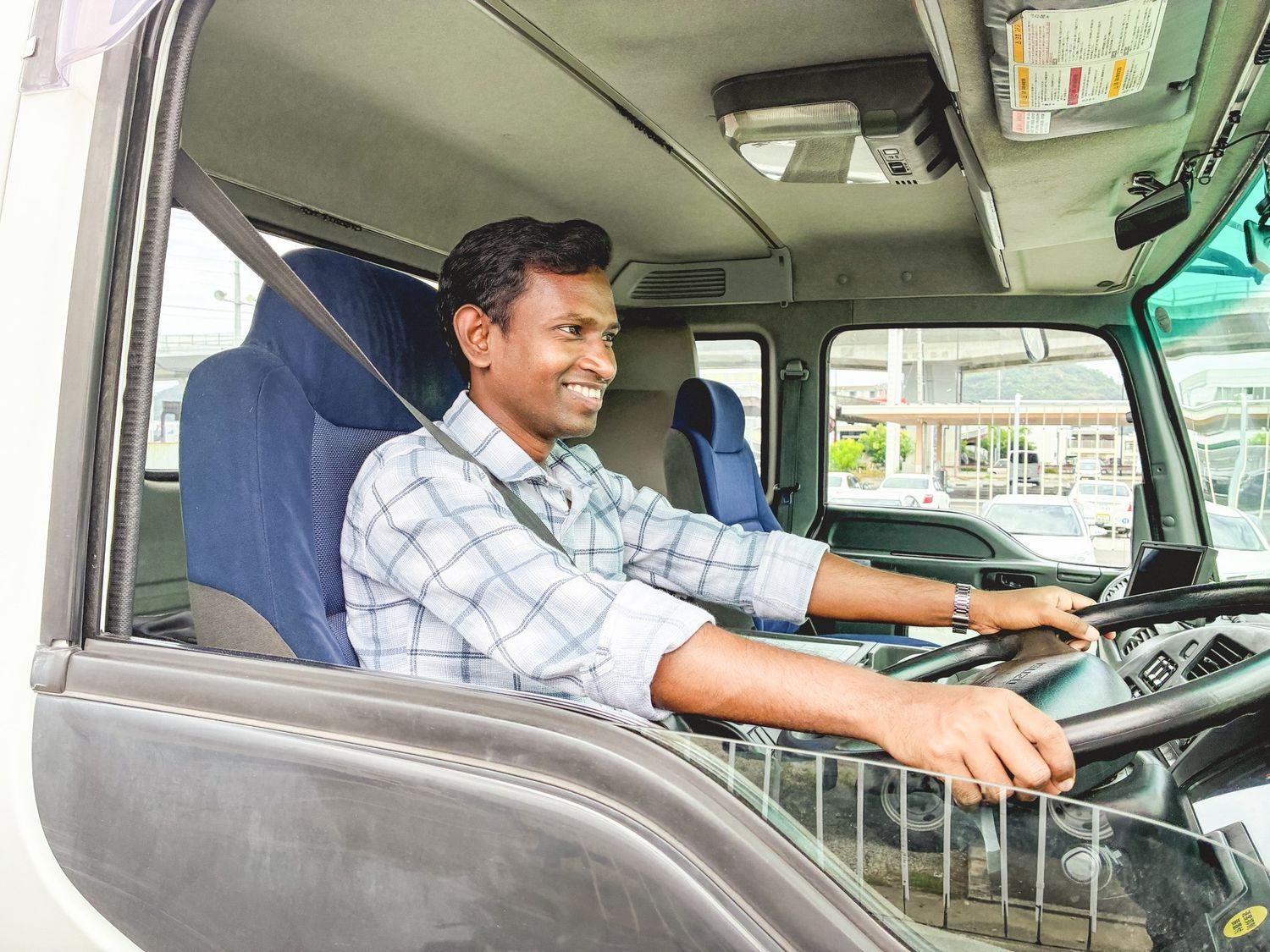
In August 2026, NAVIS HR documented three Indian driver candidates—Munda Masidas, Xess Suman and Paikaray Dillip Kumar—who obtained Japanese large-vehicle licences after previously passing the SSW truck evaluation examination in India.
Their journey is valuable because it shows what the pathway looks like beyond advertisements: language learning, examination preparation, Japanese road rules and licensing all matter before a driver can progress professionally.
Read their Japan driver journeyWhat Should You Check Before Accepting a Job?
A good overseas-job decision should be based on the employment conditions you will actually receive—not only on a headline salary. Before accepting an offer, ask for clear information on the following:
Offer inspection checklist
Tick each item once the employer has answered it clearly in writing.
0 of 8 confirmed
Frequently Asked Questions
Next stop: your eligibility
Want to Explore Truck Driver Jobs in Japan?
If you have commercial or HMV driving experience and want to know whether your profile matches current Japan opportunities, start by checking your eligibility and understanding the complete process.